What Should You Ask a Plywood Supplier Before Ordering?
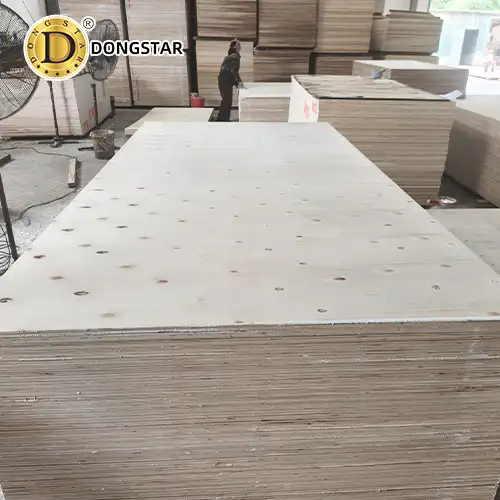
Before ordering plywood, ask the supplier for the exact wood species, veneer construction, thickness tolerance, bonding class, formaldehyde class, moisture range, face grade, certifications, inspection method, packing specification, lead time, and claim procedure. An 18 mm panel should not be purchased only as “18 mm plywood”; the purchase specification should state the permitted thickness range, panel size, number or construction of plies, veneer species, intended use, and test standard. For European applications, EN 636 covers plywood used in dry, humid, and exterior conditions, while EN 314-2 sets requirements for veneer-plywood bonding classes. A useful quotation describes measurable product properties, not only a grade name and price.
The first question should therefore be: “What exactly will be inside the panel I receive?” Ask whether the construction uses poplar, eucalyptus, birch, hardwood, pine, or a mixed species arrangement, and whether the specification applies throughout the panel or only to the face veneers. A product sold as birch-faced plywood may use a different species internally, which affects density, machining behavior, screw holding, panel weight, and exposed edges. In 2026, professional buyers should request a written construction specification rather than assume that a commercial product name describes every veneer layer.
Thickness needs the same level of detail. Ask for nominal thickness, permitted minimum and maximum finished thickness, sanding allowance, and the method used to measure finished panels. For an 18 mm order, “18 mm” alone gives the purchasing team little information if machining requires grooves, edge banding, laminating, or accurately fitted furniture parts. EN 636 includes dimensional requirements as part of its plywood specification framework, so a supplier serving European customers should be able to discuss tolerances in numerical terms.
A purchase specification can be kept simple:
| Ask the supplier | Information that should appear in the answer |
|---|---|
| What is the panel construction? | Face, back, internal veneer species and construction |
| What is the finished thickness range? | Nominal thickness plus numerical tolerance |
| What size will be delivered? | Finished length, width and dimensional tolerance |
| What bonding class applies? | Test standard and declared bonding class |
| What moisture range is controlled? | Factory acceptance range and test method |
| What surface defects are permitted? | Defined face/back acceptance criteria |
Once panel construction is clear, move to bonding performance. “Waterproof plywood” is too broad for a technical purchase order. Ask which adhesive system is used and which bonding test applies. EN 314-2:1993 remains listed by BSI as the current standard specifying bonding-quality requirements for veneer plywood according to end use, with test methods referenced through EN 314-1. EN 636:2012+A1:2015 separately classifies plywood for dry, humid, and exterior conditions. Ask for the class and test reference rather than accepting the word “waterproof.”
Bonding questions lead naturally to moisture control because a panel can meet its glue specification and still arrive unsuitable for processing if storage or shipment conditions were poor. Ask the factory for its acceptable moisture-content range at final inspection, the meter or test method used, and how many readings are taken across a batch. For a repeat purchasing program in 2026, record the agreed range in the purchase specification so incoming warehouse staff can compare delivered material against the same condition used before shipment.
Surface grading should also be converted into written acceptance limits. Terms such as B grade, BB grade, furniture grade, or commercial grade do not always produce identical appearance across manufacturers. Ask how many sound knots, repaired areas, veneer patches, splits, discolorations, sanding marks, overlaps, or open defects are permitted per face. If a panel will be painted, laminated, UV coated, or used in visible cabinetry, request production samples showing both acceptable panels and examples that would be rejected.
For appearance-sensitive orders, approve the surface standard before production and keep the approved sample or dated photographs with the purchase specification. A 2026 shipment should be compared with the agreed reference, not with a salesperson’s description of “good quality.”
Internal construction deserves separate attention because many defects cannot be judged from a finished face. Ask how veneer gaps, overlaps, repairs, and joints are controlled before pressing. Buyers cutting panels into strips, drawer components, furniture parts, or exposed-edge pieces should also ask for cut-edge samples. A full sheet may look acceptable while internal voids become visible only after CNC routing or sawing. For trial orders, testing several sheets from different positions in the bundle gives more useful information than inspecting one presentation sample.
After physical specifications are agreed, ask what documents can be supplied for the actual product. FSC Chain of Custody certification, for example, concerns identification and tracking of eligible forest-based material through manufacturing and distribution. FSC states that certification is conducted through independent certification bodies, includes annual surveillance, and certificates are generally valid for 5 years. A buyer should therefore check the supplier’s certificate scope, code, status, and the FSC claim that can legally appear on sales documents rather than relying on an FSC logo in a brochure.
For European imports, regulatory documentation is becoming more important alongside product certification. Regulation (EU) 2023/1115, the EUDR, entered into force on 29 June 2023. Following later amendments, the European Commission states that application begins on 30 December 2026 for large and medium operators and on 30 June 2027 for qualifying micro and small operators, with special timing rules for businesses previously covered by the EU Timber Regulation. Ask what origin, geolocation, supplier, production, and due-diligence information can accompany relevant wood products.
That regulatory review should be followed by a factory-capability check. Ask whether the supplier regularly manufactures your requested thickness, size, surface and construction, or whether the order requires a special production setup. Ask for monthly capacity in cubic meters or sheets, normal production lead time, minimum quantity per specification, and whether multiple thicknesses can be combined in one shipment. A factory capable of supplying 2026 documentation is still unsuitable if a buyer needs six specifications but the producer requires a separate high MOQ for each one.
Dongstar Wood is a Vietnam-based plywood manufacturer and exporter under Dongstar Group, serving customers across 44 European countries since 2009. We specialize in commercial plywood, film faced plywood, construction plywood, birch plywood, furniture plywood, and customized plywood solutions.
Backed by CE 2+, FSC®, EUDR, DOP, and SEDEX (BSCI) certifications, we meet European standards for quality, sustainability, and compliance. With over 15 years of manufacturing and export experience, we support importers, distributors, furniture manufacturers, and construction companies with reliable plywood supply and OEM/ODM solutions.
When comparing Dongstar Wood or another Plywood Supplier, request the documents for the exact item being quoted. The manufacturer name on a certificate, product description, standard number, issue date, validity, and certification scope should match the commercial offer closely enough for the buyer’s intended market. A 2026 purchasing file should also retain approved technical sheets, samples, test reports, quotations, purchase orders, inspection results, and shipping records under the same item reference.
Price should only be compared after specifications match. Ask whether the quotation is EXW, FOB, CFR, CIF, or another agreed Incoterm; what currency is used; how long the offer remains valid; whether pallet and export packing costs are included; and whether documentation fees are separate. A quotation that is 5% cheaper can stop being cheaper after differences in thickness, usable yield, packing, inland transport, inspection, or claim replacements are included.
Shipping questions then become part of product control. Request sheets per bundle, bundles per container, net weight, gross weight, cubic meters, pallet dimensions, edge protection, strapping method, moisture protection, and container loading photographs. Ask whether the loading plan is based on a 20-foot or 40-foot container and whether the proposed gross weight complies with the route and destination requirements. For mixed orders, the packing list should identify quantity by thickness and SKU rather than show only a total sheet count.
Inspection terms should be agreed before the production run. Specify which properties will be checked, how samples will be selected, which tolerances apply, and what happens when a measurement falls outside the agreed range. Measurements may include thickness, length, width, diagonal difference, moisture content, surface grade, warping, edge condition, bonding performance, markings, quantity, and packaging. In a 2026 supply contract, photographs alone should not replace numerical measurements where a specification can be measured.
The last questions should cover repeatability and claims. Ask whether veneer species, panel construction, adhesive system, face grade, and thickness specification can be changed without written approval. Then establish how a claim must be filed: deadline after delivery, batch identification, required photographs, measurements, retained samples, third-party inspection options, and possible replacement or credit procedures. Even a claim involving only 2% of a shipment becomes difficult to assess when bundles have no production or batch reference.
Before releasing the purchase order, the buyer should be able to place the quotation beside the specification and match every important field: size, thickness tolerance, veneer construction, surface grade, bonding class, emission requirement, moisture range, certification scope, packing, quantity, Incoterm, inspection method, production lead time, and claim terms. If a supplier cannot put those details in writing before a 2026 order, the buyer has limited material for checking whether the delivered plywood matches what was purchased.