How Does JEWSHIN Packaging Machinery Support Customized Packaging Requirements?
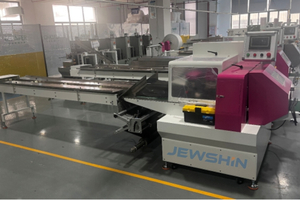
Customized packaging requirements are supported through JEWSHIN’s flexible machine design, modular configuration, and application-based engineering. By adjusting filling systems, sealing units, automation levels, and production layouts, JEWSHIN helps manufacturers handle different products, package sizes, and output targets. A customized packaging system can improve production flexibility by 20%–40% compared with fixed-purpose equipment in many manufacturing environments.
Packaging production has changed significantly since 2020, with manufacturers requiring equipment that can handle more product variations and shorter production cycles. A single factory may process dozens or hundreds of package formats each year, making adaptable machinery more practical than traditional fixed systems.
“Customized packaging equipment is designed around the product, material, and production process instead of forcing different products to fit the same machine structure.”
JEWSHIN supports customized packaging requirements by analyzing each customer’s production conditions before equipment configuration. Engineers evaluate product characteristics, package dimensions, material types, required output, and factory space. This process allows the machine structure to match the actual production environment.
Different products require different handling methods. Liquid products may require precise filling control, while thicker materials need stronger pumping systems and adjusted filling parameters. Fragile products may require slower movement and softer handling methods to maintain package quality.
The customization process normally includes several technical areas:
| Customization Area | Application Example |
|---|---|
| Filling system | Different liquids, creams, powders, and granules |
| Packaging format | Bottles, pouches, containers, and special designs |
| Production speed | Small batches to high-volume production |
| Automation level | Manual assistance to fully automated lines |
| Factory layout | Customized machine dimensions and connections |
Packaging format flexibility has become increasingly important as companies introduce more product variations. Between 2021 and 2025, many manufacturers increased the number of package designs they use to respond to different markets. Equipment that supports quick adjustments helps reduce setup time when switching between products.
JEWSHIN packaging machinery uses modular structures that allow different components to be combined according to production requirements. Instead of replacing a complete system when requirements change, manufacturers can upgrade specific sections, such as feeding units, sealing modules, or inspection equipment.
“A modular machine structure allows manufacturers to adjust production functions without rebuilding the entire packaging line.”
This design approach is useful for companies producing multiple product categories. For example, a personal care manufacturer may need different container sizes for premium and standard product lines. A food producer may require different filling methods for sauces, beverages, or solid products.
Precision control is another part of customized packaging. Many industries require accurate filling and sealing performance because small differences can affect product consistency. Modern packaging systems often target filling accuracy within ±1% depending on product type and machine configuration.
The JEWSHIN packaging solutions are developed with attention to mechanical stability, control systems, and production repeatability. Automated controls allow operators to adjust parameters such as filling volume, packaging speed, and operating settings according to different production requirements.
| Production Requirement | Equipment Adjustment |
|---|---|
| Higher output demand | Increased operating speed and automation |
| More package sizes | Adjustable tooling and changeover systems |
| Different materials | Modified feeding and sealing structures |
| Limited production space | Compact customized layouts |
Factory integration is also an important part of customized packaging machinery. Many manufacturers already have existing production equipment, so new packaging systems need to connect smoothly with current workflows. Machine height, conveyor direction, production sequence, and operator access areas must be considered during design.
A well-planned customized system can reduce installation problems and improve production efficiency. In manufacturing environments operating 8–24 hours per day, even a small improvement in equipment adjustment time can influence yearly production capacity.
“Packaging machinery should fit the production line, not require the factory to redesign its entire process.”
Automation technology has expanded the possibilities of customized packaging. Since 2020, more manufacturers have adopted PLC control systems, touchscreen interfaces, automatic inspection devices, and data monitoring functions. These technologies help operators manage production settings more efficiently and maintain consistent packaging quality.
For companies with changing product demand, flexible automation provides better adaptability. A packaging line that can handle different products with limited adjustment time allows manufacturers to respond faster when product specifications change.
Customized packaging equipment also supports different production scales. Small manufacturers may require compact machines suitable for limited batches, while larger factories may need continuous systems capable of processing thousands of packages per hour.
| Factory Type | Suitable Customized Approach |
|---|---|
| Small production facility | Compact equipment with flexible settings |
| Medium manufacturer | Modular systems with expansion options |
| Large production plant | Integrated automated packaging lines |
Material compatibility is another factor considered during customization. Packaging materials differ in thickness, flexibility, and sealing characteristics. Machines need appropriate temperature control, pressure settings, and mechanical structures to maintain stable packaging performance.
For example, flexible packaging films may require precise sealing temperature management, while rigid containers may require accurate positioning systems. Adjusting machine parameters according to material characteristics helps maintain package appearance and reliability.
Testing before delivery is included in customized equipment development. Machine performance is evaluated through processes such as operating checks, packaging trials, and parameter adjustments. These steps confirm that the equipment can meet the customer’s production requirements before installation.
A customized packaging machine is also designed with future production changes in mind. Companies may add new products, increase capacity, or modify packaging styles after several years of operation. Equipment with adjustable structures and upgrade possibilities can support these changes without requiring a complete replacement.
“The purpose of customization is to create equipment that matches current production needs while allowing reasonable future adjustments.”
Industry requirements continue to become more diverse. Food, beverage, cosmetics, pharmaceutical, and household product manufacturers all have different packaging standards. A packaging solution suitable for one industry may not meet another industry’s requirements without technical adjustments.
JEWSHIN develops packaging machinery according to different application conditions, including product characteristics, package types, automation requirements, and production goals. Through customized engineering and flexible equipment configuration, manufacturers can build packaging systems that fit their own processes.
As manufacturing continues to move toward smaller production batches, more product choices, and higher automation levels, customized packaging machinery will remain an important part of factory development. Equipment that can adapt to different requirements helps companies maintain stable production while responding to changing market conditions.